



The Ultimate Table Tennis Table Buying Guide for 2026
You can choose the best table tennis table for your needs by focusing on space, budget, and how you plan to use it. The right fit lets you enjoy smooth gameplay and ensures your table lasts for years. Check the market growth to see how popular table tennis is becoming:
| Year | Market Size (USD) | CAGR (%) |
|---|---|---|
| 2025 | 139.3 million | N/A |
| 2032 | 177.2 million | 3.5 |
Think about who will play and where you will put the table. Consider these factors:
- The size should fit your room and let you move freely.
- Your budget affects quality and durability.
- Pick a table based on whether you want casual games or serious practice.
Key Takeaways
- Think about your space before you buy a table tennis table. Measure your room to make sure you have enough space to play.
- Pick a table that fits what you need. Families may want recreational tables. Serious players should get professional tables.
- Find a table with a thick top for better bounce. A top that is 22 mm or more is best for serious play.
- Choose the right materials so your table lasts longer. Indoor tables must stay dry. Outdoor tables should handle all kinds of weather.
- Look for safety features like locks and strong frames. These keep the table steady and safe when you play.
Choosing Your Table Tennis Table
Assessing Needs and Usage
First, think about who will use your table tennis table. Also, think about how often they will play. Different people want different things from a table. Families might want a table for fun and to spend time together. Athletes need a table to practice and get better at the game. Schools and community centers use tables for gym class and teamwork. Some hospitals and wellness centers use table tennis to help people get stronger and healthier. Businesses sometimes put tables in their offices to make work more fun.
Here is a quick look at common user groups and their main needs:
| User Group | Common Needs & Usage Scenarios |
|---|---|
| Sports Training | Improves skills and performance through practice and competition. |
| Health & Wellness Programs | Supports rehabilitation, fitness, and cognitive training in hospitals and wellness centers. |
| Educational Engagement | Promotes activity and teamwork in schools and community centers, often with organized events. |
| Commercial Applications | Creates interactive displays and branded tournaments in retail and business spaces. |
You should also think about the age of the players. Kids might need a smaller table or a lighter paddle. A children table tennis blade can help them learn and have fun. If you want to play outside, look for an outdoor table tennis blade. You should also get a table that can handle the weather.
Tip: Write down your main goals for the table. This will help you choose the right features and size.
Space and Room Requirements
You need enough space to play comfortably. Measure your room before you buy a table tennis table. A full-size table is 9 feet long and 5 feet wide. You should have 4 to 5 feet of space behind each end. You also need at least 3 feet on each side. This space lets you move and hit the ball easily.
Here is a guide for room size:
| Type of Play | Minimum Room Dimensions |
|---|---|
| General Play | 19 ft long x 11 ft wide |
| Singles Play | 5 ft clearance on all sides |
| Doubles Play | 7 ft clearance on all sides |
If your room is small, you can pick a compact table tennis table. These tables fit in small rooms and are good for casual games. You can also get foldable tables to save space when you are not playing.
- Recommended clearance behind each end: 4–5 ft
- Recommended clearance on each side: at least 3 ft
- Ideal room size: 17–19 ft long, 11 ft wide, 9 ft ceiling
Pick the table size that fits your space. A regulation-size table is best for serious games. Compact tables are better for small rooms or apartments. Always check your room size before you buy.
Note: Having enough space makes the game more fun and keeps you safe.
Why the Right Table Matters
Gameplay Experience
Picking the right table tennis table changes how you play. You want a table that lets the ball bounce the same every time. Thicker tables help the ball bounce better and more evenly. This helps you guess where the ball will go. It also helps you get better at your shots. Look at the table below to see how thickness changes the game:
| Evidence Description | Key Points |
|---|---|
| Thicker tables enhance bounce quality | Better gameplay experiences due to consistency. |
| Thickness of the ping pong table top | Ensures consistent ball bounce, aiding shot choice. |
| Thickness determines bounce quality | Thicker surfaces provide better rebound. |
A good table does not shake or move when you play. This helps you focus and have more fun. The material of the table is important too. Wood tables give a smooth surface for good play. Outdoor tables use special materials so you can play outside.
- Good materials make the table last longer and play better.
- Elasticity helps the ball bounce and makes games more fun.
- Stable tables do not shake and help you play well.
Tip: Choose a table that fits how and where you want to play.
Durability and Longevity
You want your table tennis table to last a long time. The right materials are very important. Indoor tables made from wood need to stay dry. Outdoor tables use fiberglass or aluminum alloy. These materials can handle rain and sun.
| Material Type | Average Lifespan |
|---|---|
| Permanent Concrete Tables | 20-30+ years |
| Portable Aluminum/Steel Tables | 3-5 years |
Outdoor tables are good for parks and schools. If you want a table for your family, pick one that fits your space and can be used every day. A strong table means you can play more games and have more fun.
Note: A tough table saves money and lets you play for many years.
Table Tennis Table Types
Indoor vs Outdoor
First, you need to pick indoor or outdoor. Indoor tables use MDF or particleboard. These give a good and steady bounce. Indoor tables are best in dry rooms. Outdoor tables use weatherproof laminate, aluminum, or strong composites. These materials help the table last in sun and rain. Outdoor tables are heavier and do not move in the wind. You need to clean them more because of the weather. Here is a quick look at the differences:
| Feature | Indoor Tables | Outdoor Tables |
|---|---|---|
| Surface Material | MDF or high quality particleboard | Weatherproof laminate, aluminum, or tough composites |
| Bounce Quality | Crisp and predictable bounce | Softer or less sharp bounce |
| Durability | Susceptible to humidity and moisture | Built to withstand sun, rain, and temperature changes |
| Frame Material | Lightweight frames | Steel or aluminum with protective coatings |
| Stability | Needs a stable indoor environment | Heavier feel to resist movement in wind |
| Maintenance | Requires less maintenance | Requires regular maintenance due to weather exposure |
| Lifespan | Shorter lifespan due to environmental factors | Longer lifespan due to weather resistance |
Tip: Pick an outdoor table if you want to play outside or in your garage.
Recreational Tables
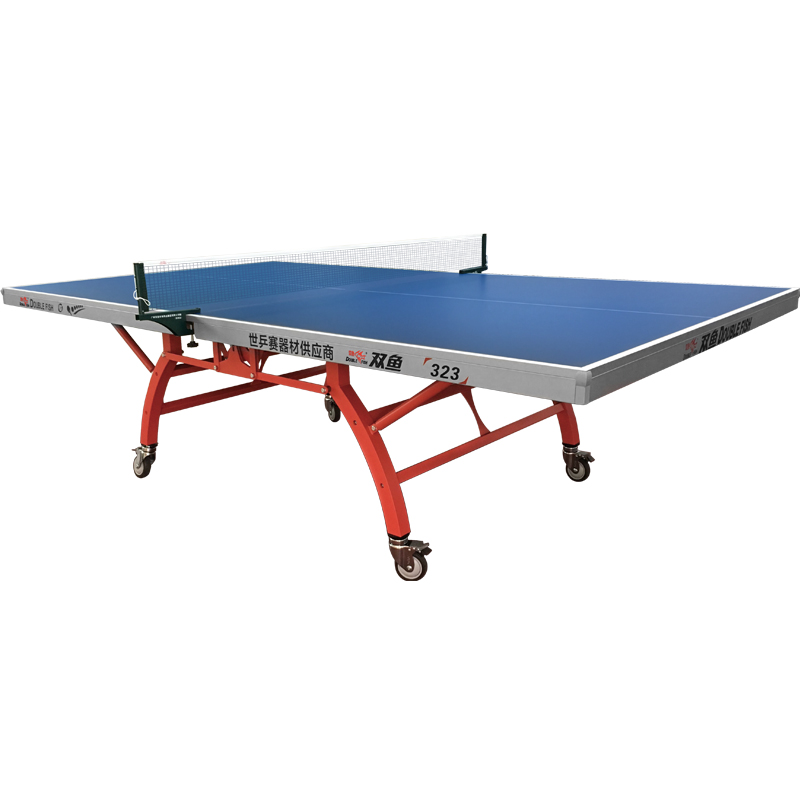
Recreational tables are great for families and beginners. You can use them for fun games at home or school. These tables are strong and have a nice bounce. They help you learn and enjoy playing. You do not need official rules for casual games. Here is how recreational tables are different from professional ones:
| Feature | Recreational Tables | Professional Tables |
|---|---|---|
| Intended Use | Beginners and casual players | Serious players |
| Construction Quality | Good bounce, solid construction | Meets official competition standards |
| Performance Characteristics | Easy learning curve, enjoyable for families | Extremely consistent bounce, precision for advanced play |
Note: Recreational tables are perfect for family rooms and community centers.
Professional Tables
Professional tables follow strict rules. You see these tables in clubs and tournaments. They give a steady bounce and very exact play. The top is thicker and the frame is stronger. You need a special space for a professional table. These tables help you practice hard and play at a high level.
- Meets official size and thickness standards
- Gives the best bounce and stability
- Made for serious training and competition
Foldable vs Stationary
Foldable tables are easy to use. You can set them up, fold them, and move them. They are good for rooms used for many things. Wheels make it simple to roll them away. Foldable tables are best for casual games. Stationary tables stay in one spot. They are more stable and last longer. You need a special space for a stationary table. Here is a quick comparison:
| Feature | Foldable Tables | Stationary Tables |
|---|---|---|
| Convenience | Easy setup, breakdown, and storage | Permanent setup, no need to move |
| Stability | Less stable, suitable for casual play | Superior stability, ideal for intense gameplay |
| Space Efficiency | Saves space, fits in multipurpose rooms | Requires dedicated space, less flexible |
| Portability | Built-in wheels for easy movement | Heavy and not designed for movement |
| Durability | Generally less durable, suitable for casual use | More durable, built for long-term use |
Tip: Choose a foldable table if you need to save space or move it a lot.
Comparing Key Features
Choosing the right table tennis table means looking closely at its features. You want a table that lasts, feels good to play on, and fits your space. Here is what you should check before you buy.
Tabletop Thickness and Materials
The thickness of the tabletop changes how the ball bounces. Thicker tops give a better, more even bounce. If you want to play like the pros, you need a thick tabletop. Here is a guide to help you pick the right thickness:
| Thickness (mm) | Suitable For |
|---|---|
| 12–15 | Beginners and recreational use |
| 16–19 | Regular home play |
| 22–25 | Professional-level performance |
A tabletop that is 22 mm or thicker gives you the best bounce and helps you play your best. The material also matters. Tables made from high-density polyethylene or aluminum last longer and can handle weather if you play outside. Consistent bounce helps you practice and enjoy the game more.
| Feature | Impact on Playability and Longevity |
|---|---|
| Table Surface Thickness | 22 mm or more gives great bounce and even play for matches. |
| Material Durability | Polyethylene and aluminum last longer and resist weather. |
| Bounce Consistency | Good bounce helps you learn and play better. |
| Stability Features | Adjustable legs and strong frames stop wobbling. |
| Weather Resistance | Tough materials keep the table safe from sun and rain. |
Tip: Pick a thicker tabletop if you want a better game and a table that lasts.
Frame and Legs
The frame and legs hold up the table. Strong frames keep the table steady, even during hard games. Steel frames are the strongest and last the longest. Aluminum frames are lighter and do not rust, so they work well for both indoor and outdoor tables. The undercarriage, or the part under the table, should also be strong. Steel undercarriages give the best support.
| Material Type | Description |
|---|---|
| Frame Material | Steel frames offer top durability and stability for tough matches. |
| Aluminum frames are light and resist rust, good for all uses. | |
| Undercarriage | Steel undercarriages give strong support. |
| Material | Wood undercarriages cost less but do not last as long as steel. |
Frame design also affects safety. Look for tables with locking points, strong wheels, and adjustable leg levelers. These features keep the table steady and safe, even on uneven floors.
- Locking points add safety and stop the table from moving.
- High-quality wheels make it easy to move the table and keep it in place.
- Adjustable leg levelers help the table stay flat on any surface.
Note: A strong frame and good legs keep your table safe and steady for every game.
Portability and Storage
If you need to move your table or store it, check for features that make this easy. Foldable tables save space and let you practice alone. Wheels help you roll the table to a new spot. Make sure the wheels have locks so the table does not move during play.
| Feature | Description |
|---|---|
| Locking Mechanisms | Stop the table from folding by accident. Always check locks before you play. |
| Wheel Locks | Keep the table steady during games. |
| Build Quality | Lighter tables move easier, but strong frames last longer. |
| Wheels | Big wheels make moving easy. Brakes keep the table still. |
| Playback Position | Raise one half of the table to practice by yourself. |
| Storage Position | Fold both sides up to save space and roll the table away. |
| Foldable Design | Most tables fold for easy storage and solo practice. |
| Storage Size | Check the size when folded to make sure it fits your space. |
Tip: If you have a small room or need to move your table often, pick a foldable model with strong wheels.
Assembly Ease
Some tables are easy to set up. Others take more time. If you want to start playing fast, look for tables that need less assembly. Here is how long it takes to set up some popular models:
| Table Model | Assembly Time |
|---|---|
| JOOLA Tour 2500 | 15-20 minutes |
| Cornilleau 700X Outdoor | 60–120 minutes |
Tables that come mostly assembled save you time and effort. Always check the instructions before you buy.
Note: Quick assembly means you can start playing sooner and avoid frustration.
Accessories and Warranty
Many tables come with extra features. Some have holders for paddles and balls. Others let you play alone by folding up one side. Warranties protect your table if something goes wrong. Some brands offer a 1-year warranty, while others give up to 10 years.
| Accessories Included | Warranty Details |
|---|---|
| Accessory holders | Cornilleau gives a 10-year guarantee on tops and parts, except for wear items. |
| Playback mode | Warranties range from 1 to 10 years, depending on the brand. |
| Warranty Duration | Description |
|---|---|
| 1 year | Shortest warranty from some brands. |
| Up to 10 years | Longer warranties mean more peace of mind. |
Tip: Choose a table with a long warranty and useful accessories for the best value.
Table Size Standards and Gameplay
Standard size matters for fair play. Official tables measure 9 feet long, 5 feet wide, and 2 feet 6 inches high. The net adds another 6 inches in height. Playing on a standard-size table helps you learn the right skills and makes games more fun.
| Dimension | Measurement |
|---|---|
| Length | 9 feet |
| Width | 5 feet |
| Height | 2 feet 6 inches |
| Net Height | 6 inches |
A table that meets these standards gives you a real game feel. You can practice like the pros and improve your skills.
Note: Always check the size before you buy to make sure you get the best gameplay experience.
Top Table Tennis Table Recommendations
Best Value
You want a table that is worth your money. Pick one with a thick top, strong frame, and good weight. These things help the table last longer. They also make games more fun. Here is a simple guide for what to look for:
| Criteria | Description |
|---|---|
| Table-Top Thickness | Thicker tops give you a better bounce and more fun. |
| Weight | Heavier tables stay in place and last longer. |
| Frame Strength | A strong frame keeps your table steady and safe. |





 Overseas business:(020)8431 9554
 +86 13829778212